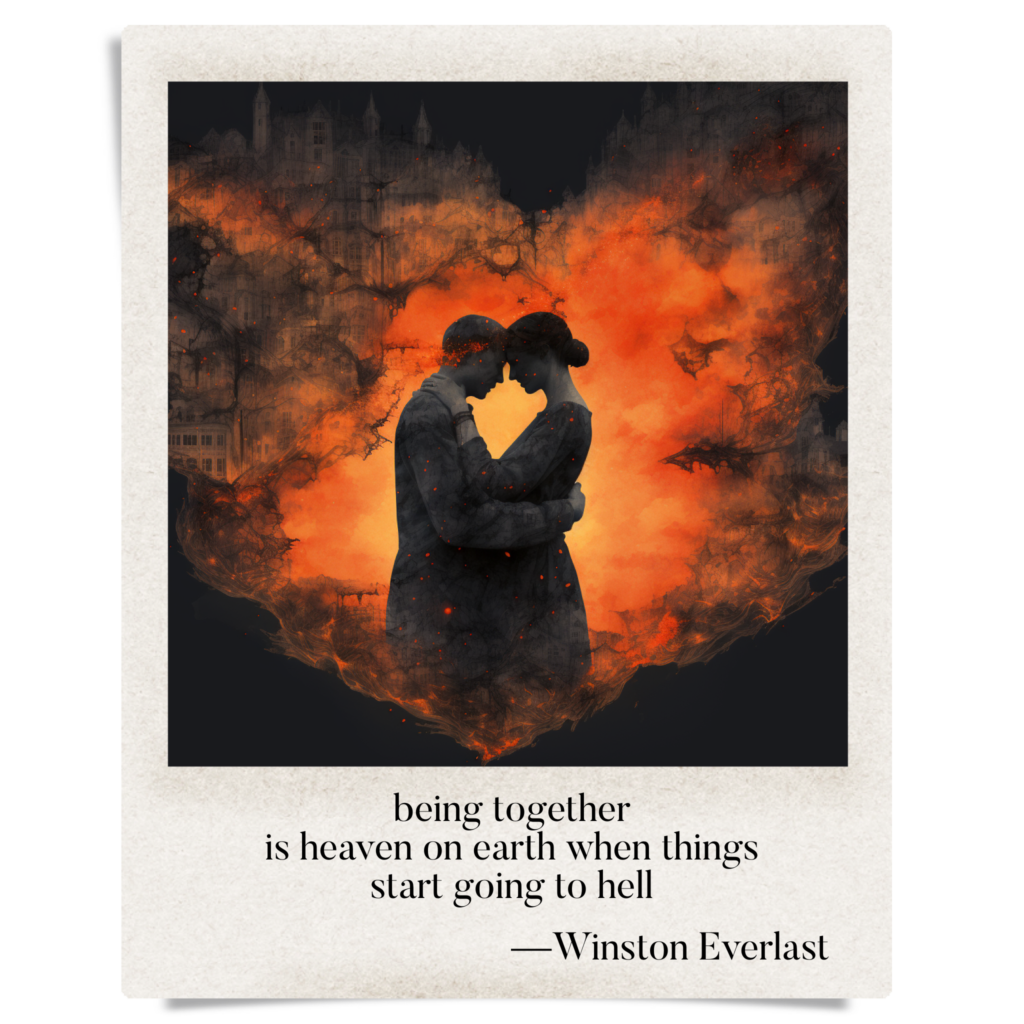
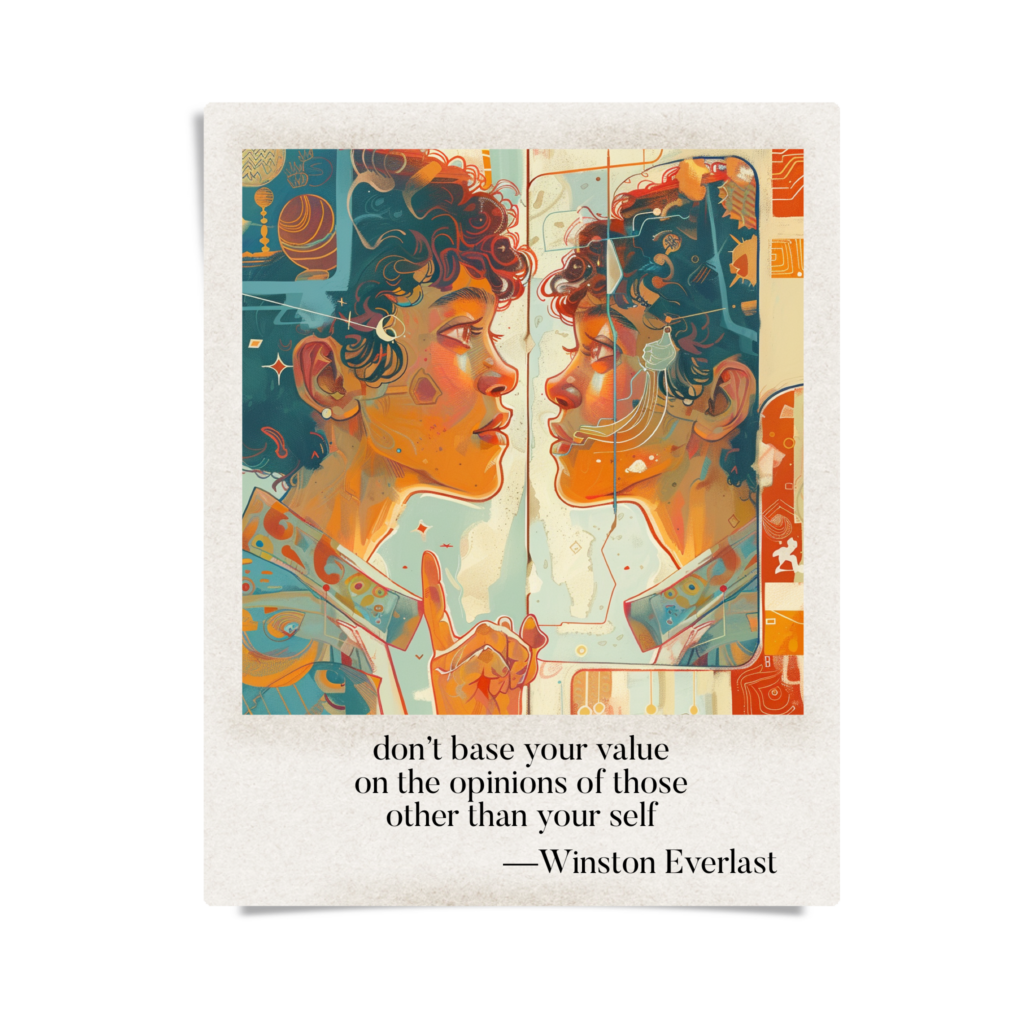
There is a moment in a good comedy club when a joke lands and the room doesn’t just laugh: it exhales. Not the polite chuckle of recognition, not the startled bark of surprise, but something more like relief. Someone has finally said the thing. Someone looked at the ordinary absurdity of being alive — the marriage that wears thin, the boss who takes credit, the mirror that tells the truth at the worst possible moment — and found the exact words for it. The room breathes out together.
That exhale is what these senryu reach for. Not the laugh of recognition alone, though the laugh is welcome, but the nod that follows it: the quiet amen of a reader who has lived what the poem describes and finds it, suddenly, named.
The mirror held up
Senryu (川柳) shares its 5-7-5 syllabic skeleton with haiku and its origins in the great haikai tradition of Japan. What it does not share is haiku’s reverence for nature — the seasonal word, the cutting pause before the transcendent image. Where haiku turns its gaze outward, to the frog, the cherry blossom, the winter moon, senryu turns its gaze inward and sideways, toward the human being in the room. Toward us. Toward what we do when no one is watching, and what we do when everyone is.
The form takes its name from Karai Hachiemon (1718–1790), a judge of competitive verse contests in Edo whose literary name was Senryū — river willow. His selections from the maekuzuke competitions, published from 1765 onward in the anthology Haifū Yanagidaru (Willow Barrel), were full of human observation: sharp, funny, often uncomfortable, always true. The classical distinction is clean. Haiku observes nature. Senryu observes people. The haiku says: look at that. The senryu says: you do that too, don’t you.
Five years in the dance
Winston Everlast lived in Japan from 1988 to 1993 — five years at the height of the bubble economy. He arrived as a gaijin, with all the cultural visibility that status carries in a society that has refined the art of social choreography over centuries. The Japanese have an intricate dance of formality: what is said and what is meant, the public face and the private one, the obligation (giri) and the feeling (ninjō), and the ancient tension between them that runs through Japanese literature and life alike. The assumption was that a gaijin could not learn the steps. He learned the steps.
And in learning them, he noticed something that has informed his writing ever since: underneath the formality, underneath the particular choreography of any given culture, the concerns are the same everywhere. Love. Family. Friends. Death. The embarrassments of the body. The failures of the will. The gap between who we present ourselves to be and who we actually are at three in the morning. The senryu poets of the Edo period, writing about nagging spouses and petty officialdom and the indignities of age, were working the same material as every comedian who has ever stood in front of a microphone and said: am I right? The answer, across cultures and centuries, is yes.
The comedian’s art
Comedians are the best observers of life — not because they are wiser than other artists, but because they are held to an immediate and unforgiving standard. The poem can sit on the page and wait for the reader to come to it. The stand-up cannot. The joke either lands in the room, right now, or it doesn’t. The comedian develops, through this relentless feedback, an acute sensitivity to what is true and what merely sounds true, because only the genuinely true gets the laugh. The tradition that runs from Lenny Bruce through George Carlin through Richard Pryor shares with the senryu tradition a single conviction: that the truth about human beings is simultaneously painful and funny. The laugh and the wince are not opposites but partners. We laugh because we identify. We identify because someone has seen us clearly. The comedian and the senryu poet are both in the business of clear sight.
The formal commitment
Every senryu here is written in strict 5-7-5 syllables. Stand-up comedians know that timing is everything: a joke delivered one beat too early or one beat too late is a different joke, usually a worse one. The discipline of 5-7-5 imposes a timing on the senryu poet analogous to the comedian’s count. The observation must fit the form. The punchline, or the recognition, or the wince, must arrive in the right syllable, or the poem has failed. A senryu that sprawls into eighteen syllables because the observation needed more room is a senryu that needed more editing. Compression demands precision. Precision, in observation of human nature, is everything.
These poems are about people — about the things people have always been about: love and its complications, family and its obligations, friendship and its failures, death and its certainty, and the vast comic territory between birth and the grave where most of life actually happens. They are also about the specific texture of the early twenty-first century: the phone that replaced the conversation, the bot that replaced the colleague. Some will age poorly. That is the cost of being present — of writing about now rather than reaching for the universal abstraction. The surface changes. The human nature underneath it does not.