On January 24, 1975, Keith Jarrett arrived at the Cologne Opera House exhausted, hungry, and in pain. He had requested a Bösendorfer 290 Imperial concert grand. What awaited him was a dilapidated baby grand with sticky keys, dead notes in the upper registers, and a broken sustain pedal. He initially refused to play. Persuaded by a teenage promoter who had sold out the hall, he sat down at the inadequate instrument and simply began. What followed — The Köln Concert — became the best-selling piano album of all time. It is entirely improvised. It was performed once, on a broken piano, after midnight. It will never happen again.
The limitations of that piano were not obstacles to the music — they were the music. Winston Everlast has been playing improvised piano since childhood; the piano has been a lifelong practice — not performance, not repertoire, but the daily act of sitting down and finding out what is there. Each session unrepeatable. Katauta, he believes, is the literary form of that practice.
The oldest half
Katauta (片歌) is the oldest form in the 5-7-5 family by a considerable distance. While haiku emerged in the seventeenth century and zappai flowered in the Edo period, katauta appears in the Man’yōshū, the oldest anthology of Japanese poetry, compiled in the eighth century. It was ancient before Bashō was born.
Its name is its definition: 片 (kata) means half, one-sided, incomplete; 歌 (uta) means song. Katauta is the half-song — a poem that knows it is unfinished, that reaches toward a completion it cannot provide for itself. It was traditionally written as one lover addressing another, sent across the city in the morning as a substitute for a letter. It awaited a reply. When the reply came, also in 5-7-5, the two katauta together became a sedoka: the whole song, the completed exchange. But the single katauta, the unaccompanied half-song, has its own integrity. It is not a fragment. It is a reaching. The poem leans forward into the space where the reader stands, and it is in that space that the meaning lives.
The improviser’s form
The improvising pianist and the katauta poet share a fundamental condition: they are always in the middle of something that has no predetermined end. The improviser does not know, when the hands touch the keys, where the music will go. The katauta poet does not know, when the poem leaves the page, how it will be received — what it will open in the reader, what the reader will bring to it from their own life that the poet could not have anticipated. Both are acts of reaching. Both are completed, if they are completed at all, by someone else. The Köln Concert’s broken piano is the katauta’s incompleteness made sonic. The constraint is not a wound. It is the door.
The koan and the question that holds
In the Zen tradition, a koan is a question that cannot be answered by the reasoning mind — not a riddle with a solution but a meditation object: something to hold, to sit with, to return to. The katauta functions the same way. It does not argue. It does not explain. It does not resolve. It presents a moment, or an image, or an address, and then it stops — the way the inhale stops before becoming the exhale. It holds the question open.
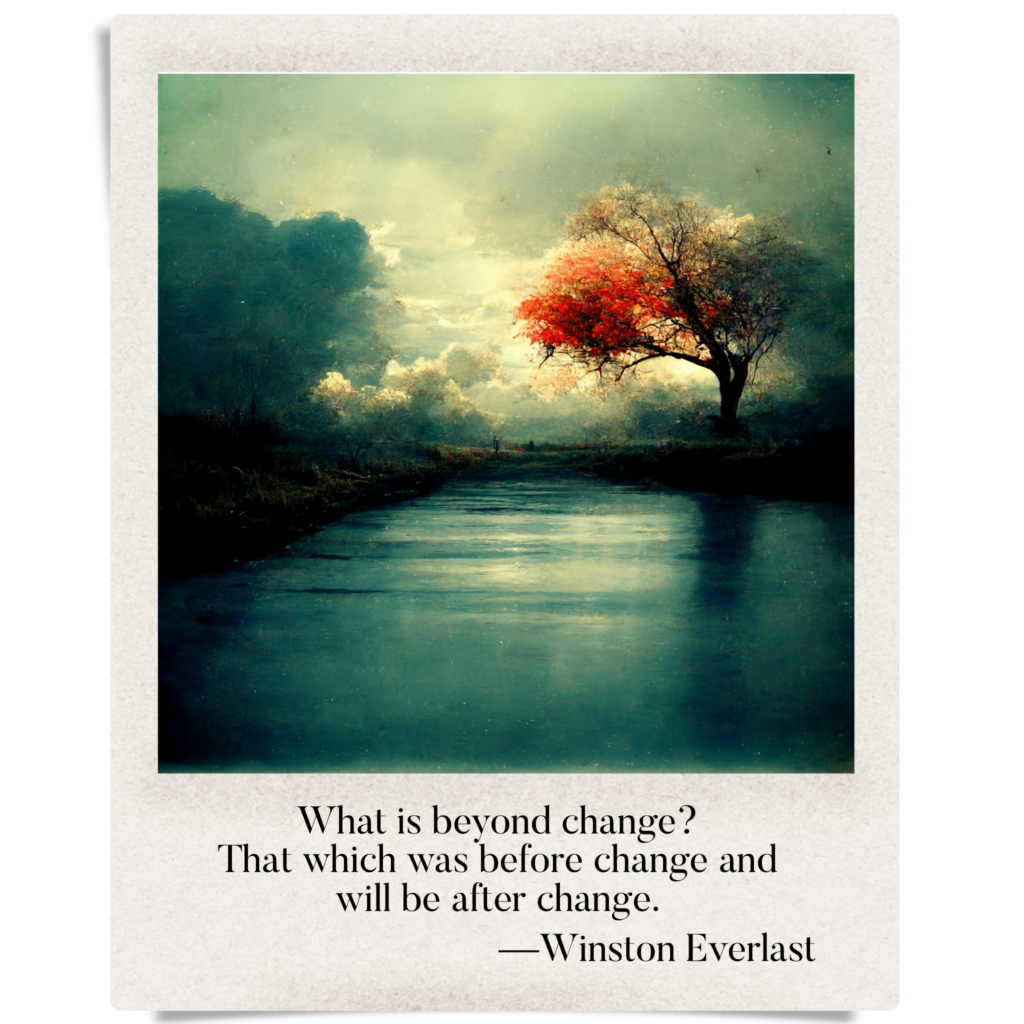
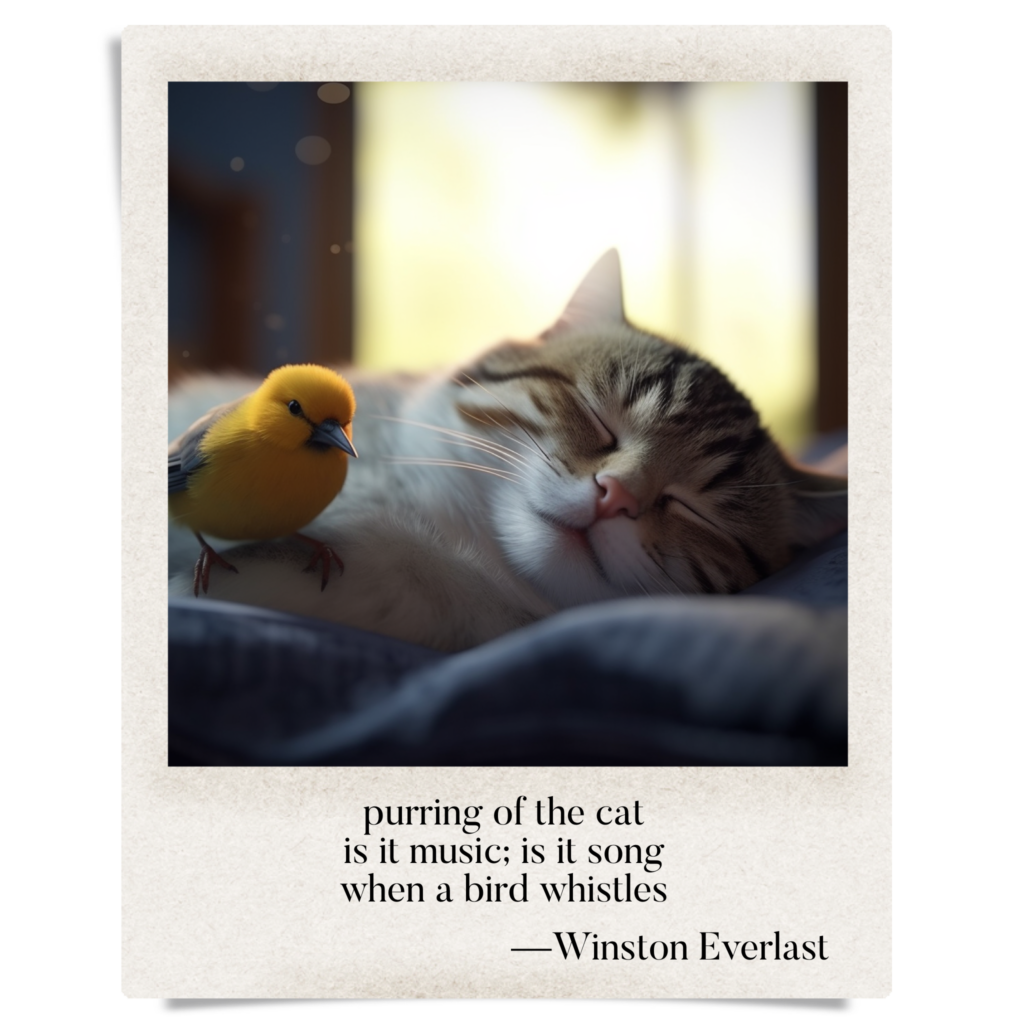
The haiga deepens this function. When poem and image are placed together, a third question opens: why this image for this poem? What did the generating intelligence — human, artificial, or the collaboration between them — find in the poem that produced this particular visual response? That question, sitting between the verbal and the visual, is itself a koan. It does not have a right answer. It has many possible answers, and the reader’s answer reveals something about the reader as much as about the poem.
Attention, in a distracted age
A widely circulated study once claimed the average human attention span had dropped below that of a goldfish. The statistic has been challenged, but it persists in the culture because it feels true — because we have all had the experience of picking up our phones in the middle of a thought we were about to complete. Into this environment, each haiga asks for perhaps thirty seconds of genuine attention. Not passive attention, not the glazed reception of a feed, but active attention: reading, looking, sitting with the space between the poem and the image, noticing what arises. The practice of attending — even briefly, even imperfectly — to something that asks for attention rather than demands it is its own form of restoration. The form is over a thousand years old. It has outlasted every previous distraction. There is cautious optimism that it will outlast the smartphone as well.
To the reader who completes this
Every katauta here is addressed to the reader — not to a specific person, not to a memory, but to whoever lets their eyes settle on the page. You are the other half of every katauta. The poem is the inhale. You are the exhale. That is not a borrowed metaphor; it is the structural truth of the form. The katauta cannot be completed by the poet. It can only be completed by the person who receives it.