Ezra Pound’s Words of Advice on Creating AI-generated Art
· Winston Everlast
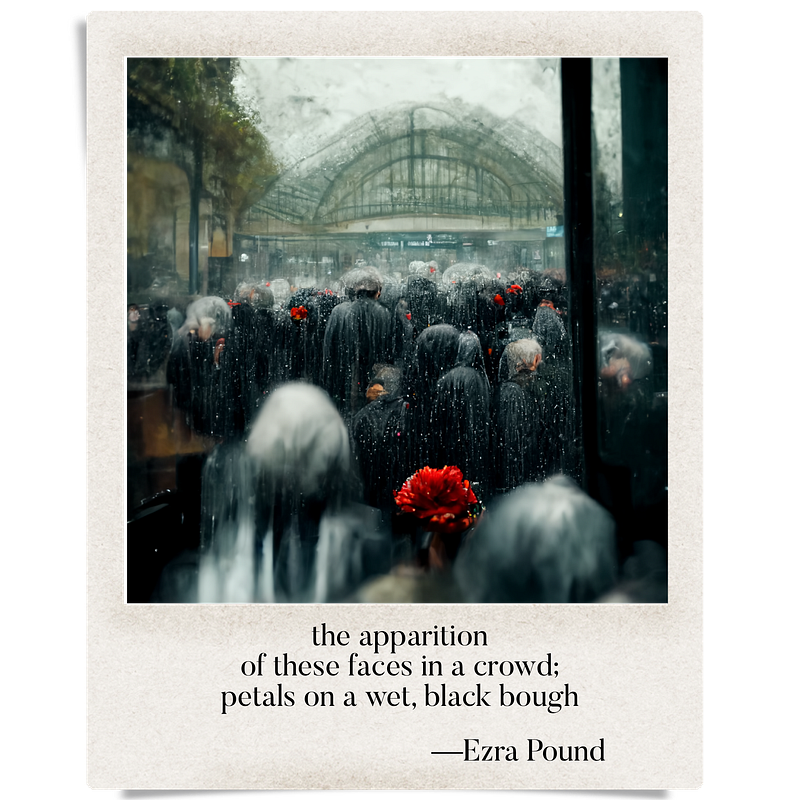
Imagism was a poetic movement which began back in 1912 as a reaction to the popular romantic and Victorian poetry of the time. While there were a handful of poets who were involved in the Imagism movement, the one you’ve likely most heard of was Ezra Pound. The Imagists were known for penning concise versus with a clarity focused on creating exact visual images and imagery. In the AI-art generation world, these are known as prompts.
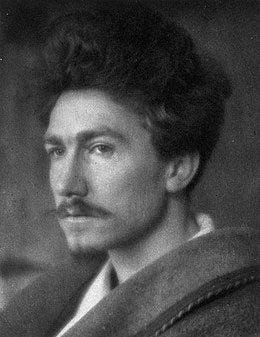
The imagists were influenced by the brevity–and clarity–of Japanese haiku and other short forms of poetry from China and ancient Greece. Pound’s theory was that an image was something that presented an intellectual and emotional complexity in an instant of time, using no superfluous words. While he was referring to actual poetry, of course, many of his guidelines found in his essay A Few Don’ts by an Imagiste (Poetry magazine, Vol. 1, №6 (Mar, 1913) are of particular relevance for those creating prompts for AI-generated images:
- Direct treatment of the subject. The prompt should state directly what you want the AI image to look like. AI’s are literal and take what you write in your prompt literally and not figuratively nor metaphorically. And forget similes. AI’s hate similes like…
- No superfluous words. Use no word in the prompt that does not contribute to the creation of the image. Use as few words as necessary.
- Compose in the rhythm of the phrase. This is an interesting one as Pound was rebelling against the use of iambic pentameter and other commonly used metronomic sentence rhythms. While this doesn’t strictly apply to prompt creation, there are additional elements which could/should/must be added to a prompt to give the AI guidance. These might be styles (e.g. “cyberpunk” or “impressionism”), mediums (e.g. “watercolor” or “tin type”), or parameters (e.g. –no [descriptor], –iw 5, — ar 3:2). See the Midjourney Documentation guide
Pound also says that Imagists should try to absorb the influence of as many great artists as possible. He goes so far as to say:
Be influenced by as many great artists as you can, but have the decency either to acknowledge the debt outright, or to try to conceal it. A Few Don’ts by an Imagiste, p. 202.
The MJ team and its founder echoes this by suggesting that we try invoking unique artists to get a unique style and even combine names for new styles (e.g. “A temple by Greg Rutkowski and Ross Tran.”) One of the wonderful things about MidJourney is that every imagine contains the prompt from which it was derived, so there is no hiding a direct artistic style (e.g. “in the style of Van Gogh.”) This allows users to explore various artists whom they may never have heard of before. An example of this, for me, was the Polish artist Zdzisław Beksiński” which I saw in a prompt. Having never heard of him, I took a look. Suffice to say, if you like dark surrealism with a taste of the dystopian and apocalyptic, Zdzislaw might be your new style.
I suspect that if if Ezra were around today, he wouldn’t be caught up in the social media flame wars about whether or not this is the end of “art” as we know it. He would treat it as if it was the end — and a new beginning:
The artist is always beginning. Any work of art which is not a beginning, an invention, a discovery is of little worth.
― Ezra Pound
Leave a Reply