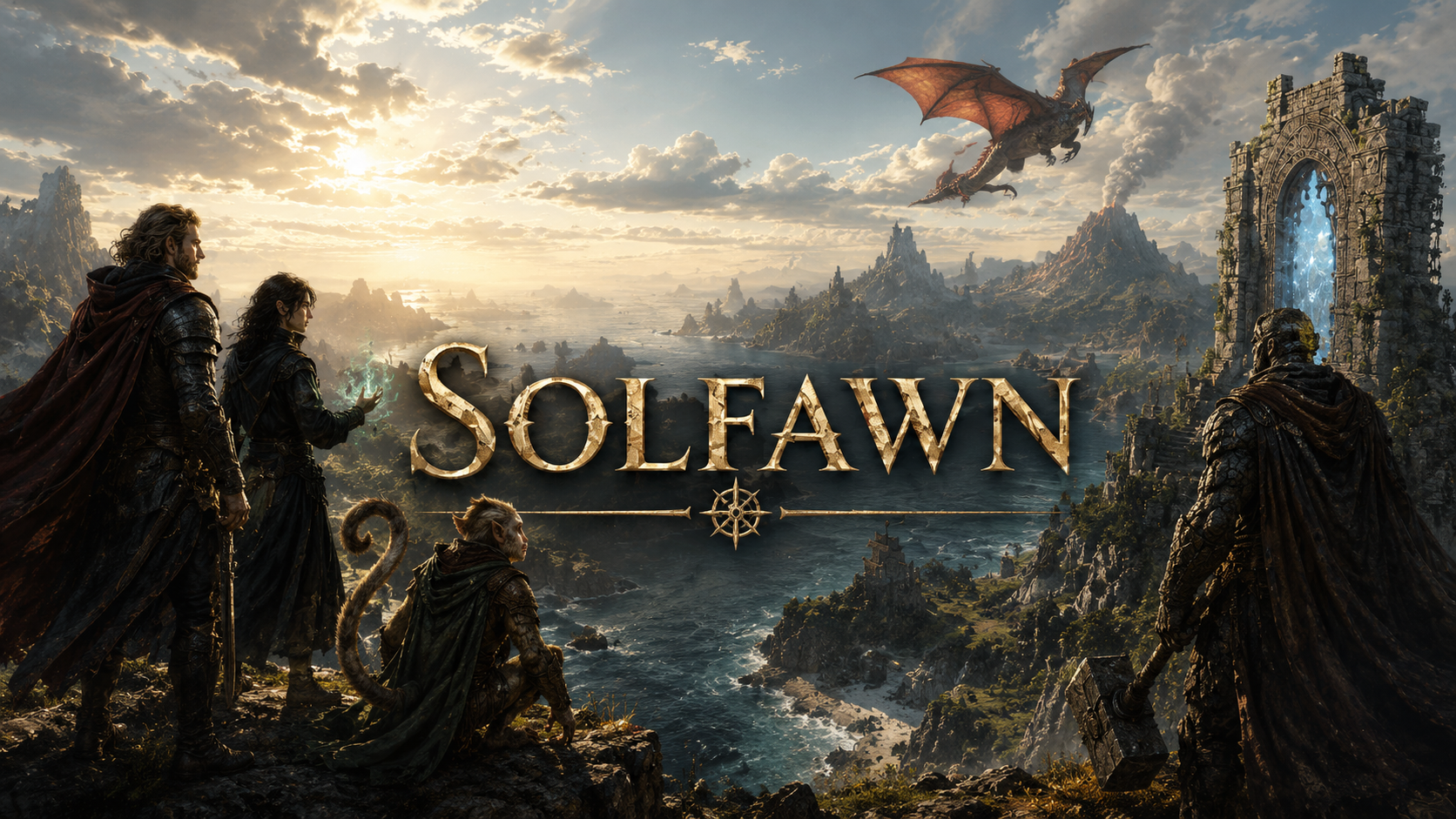
Solfawn began at a table — a Daggerheart campaign that meets every Thursday night, four players and a game master, dice and note-taking and the slow accumulation of a world. The notes became scenes, the scenes became chapters, and the chapters became novels. The campaign is still being played, which means the story is still being written. That is the invitation of this page: Book One is finished and waiting for you; Book Two you can watch arrive.
Book One — Blood & Brine
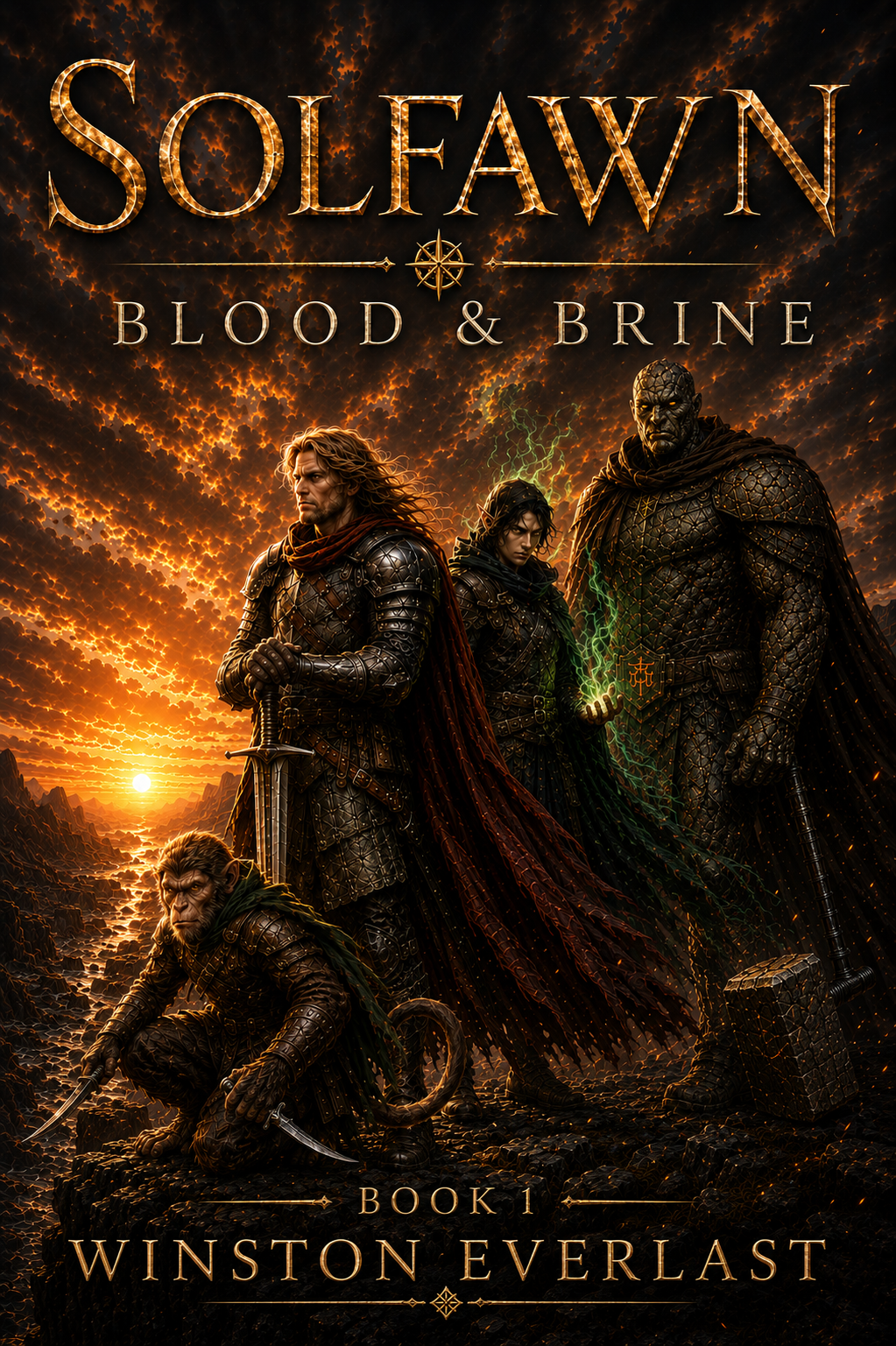
When the orc pirates burned the Ru Temple, they took everything — the sacred rings, the artisans, and one small capuchin, a Simiah temple child named Saru, kept alive because he made the crew laugh. By the time the ship reached port he had killed his orc captor, taken the orc’s broken tusk as a trophy, and acquired a name the pirates gave him as mockery. He kept it. Apple. It fit what he’d become better than the name he was born with.
What follows is the story of four unlikely travellers across a world growing stranger and more dangerous by the mile — through garrison walls and fighting schools, harbour cities and the smouldering ruins of the Blacklands. Somewhere ahead, a dark wizard named Malrick is moving through the world leaving things behind. Stitched creatures. Unnatural horrors. And a silence where the living used to be.
Read it on Kindle · Order the paperback
Book Two — Fire & Bone · The Read-Along
Book Two is being written right now, a chapter at a time, as the campaign unfolds. Chapters are posted here as they are finished — usually weekly, because that is how often the dice get rolled. Read along, and listen along: each chapter has a companion podcast episode.
Chapters
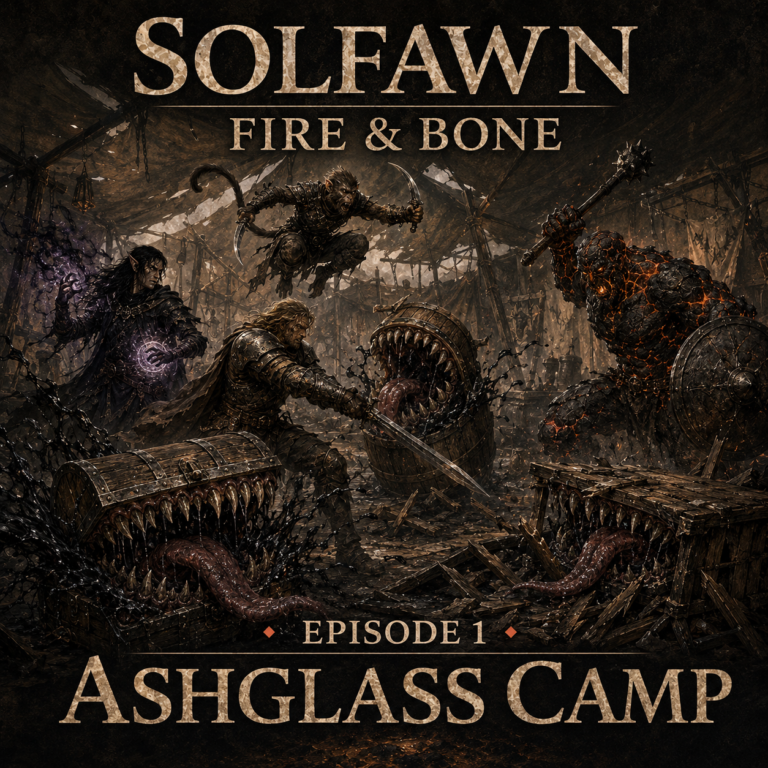 Fire & Bone — Chapter I
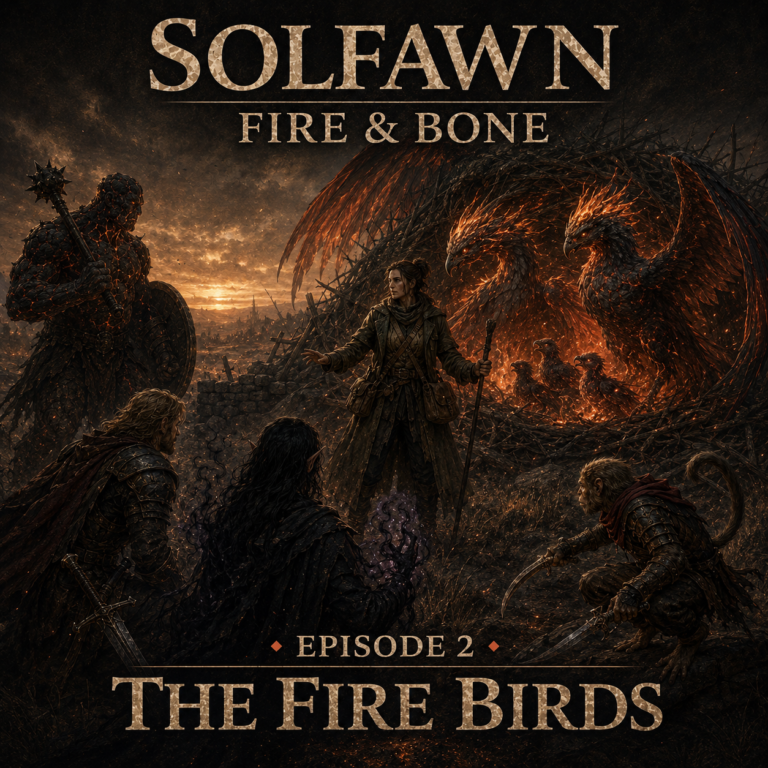 Fire & Bone — Chapter II
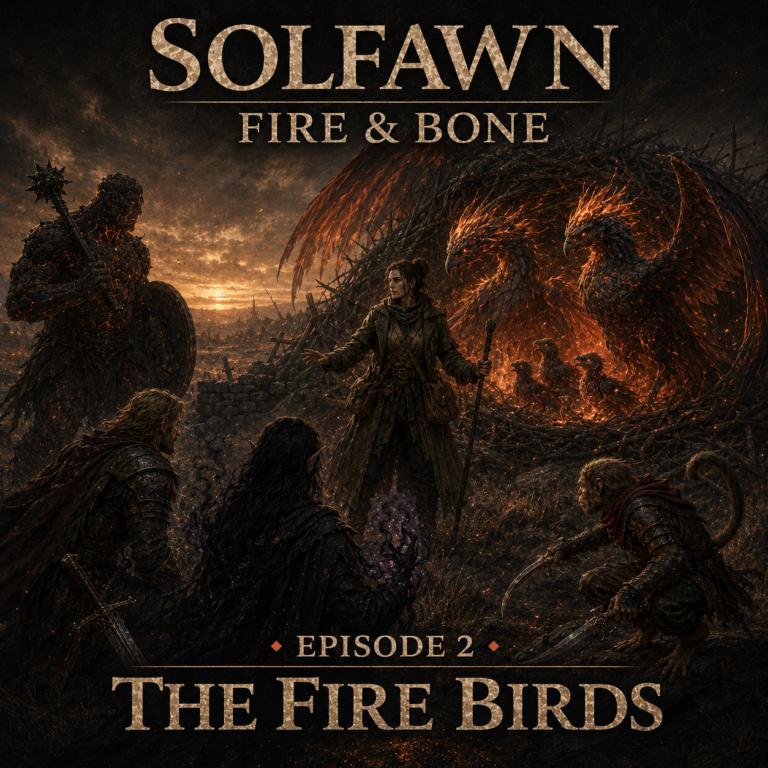 Fire & Bone — Chapter III
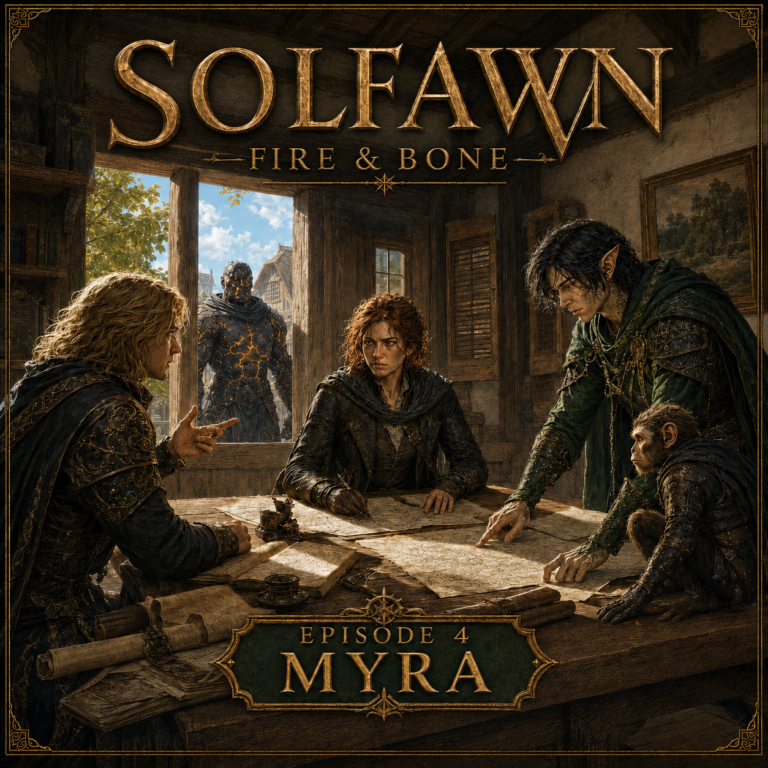 Fire & Bone — Chapter IV
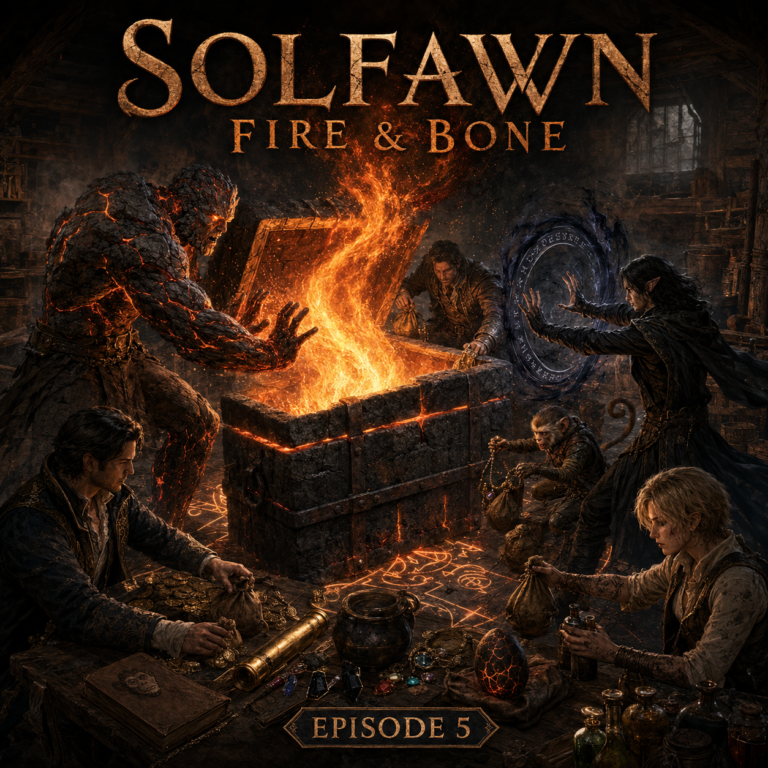 Fire & Bone — Chapter V
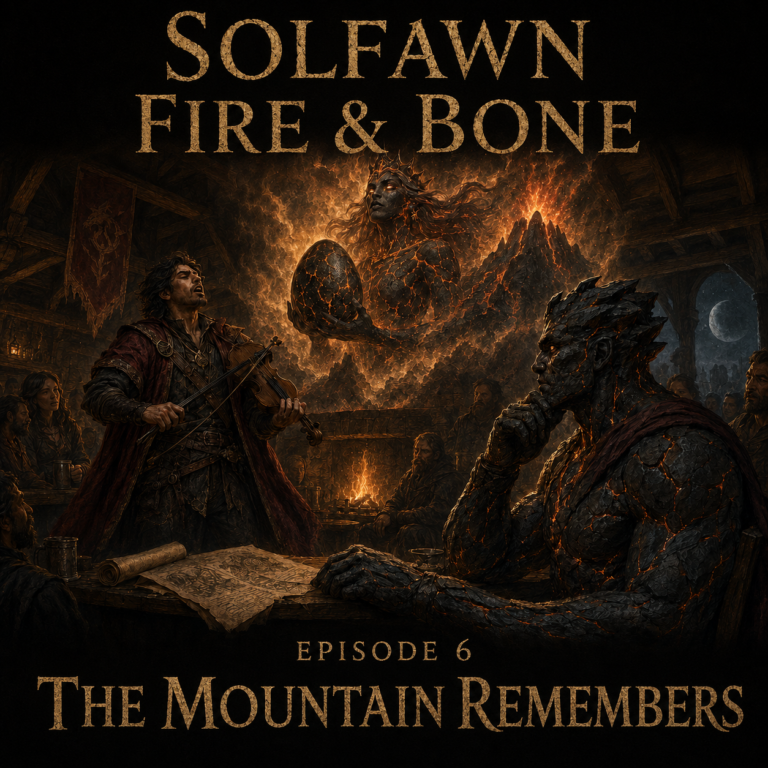 Fire & Bone — Chapter VI
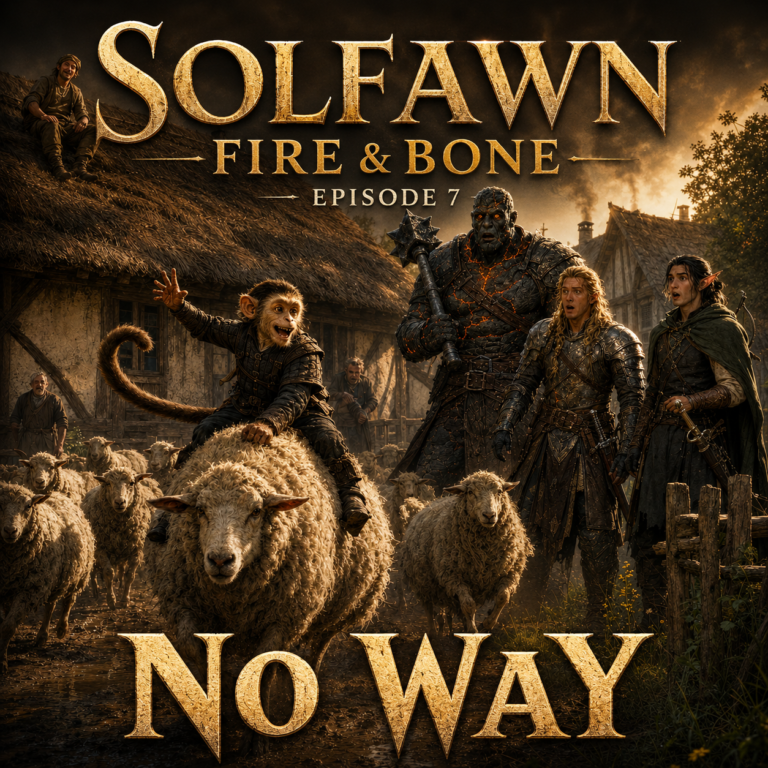 Fire & Bone — Chapter VII
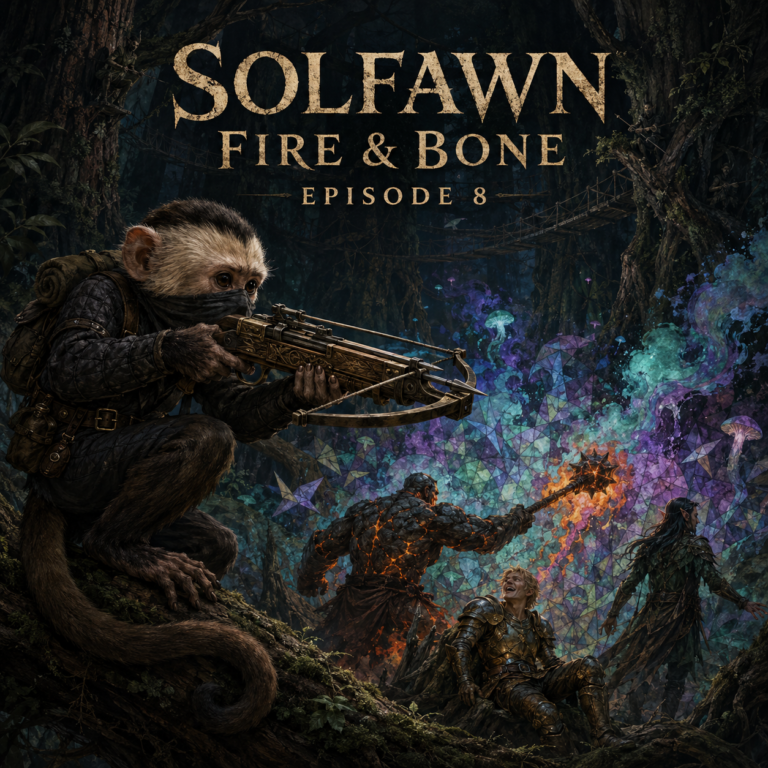 Fire & Bone — Chapter VIII
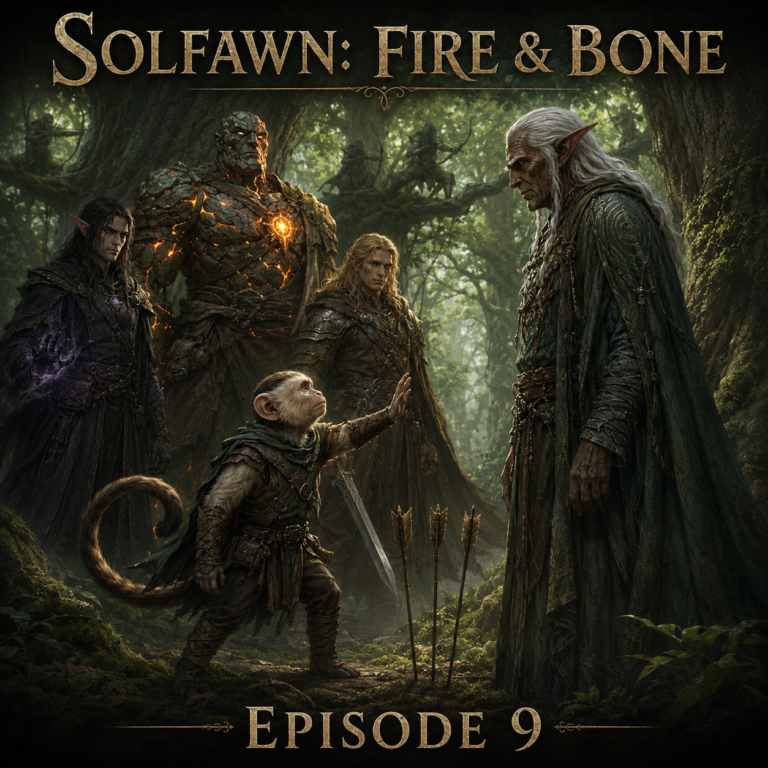 Fire & Bone — Chapter IX
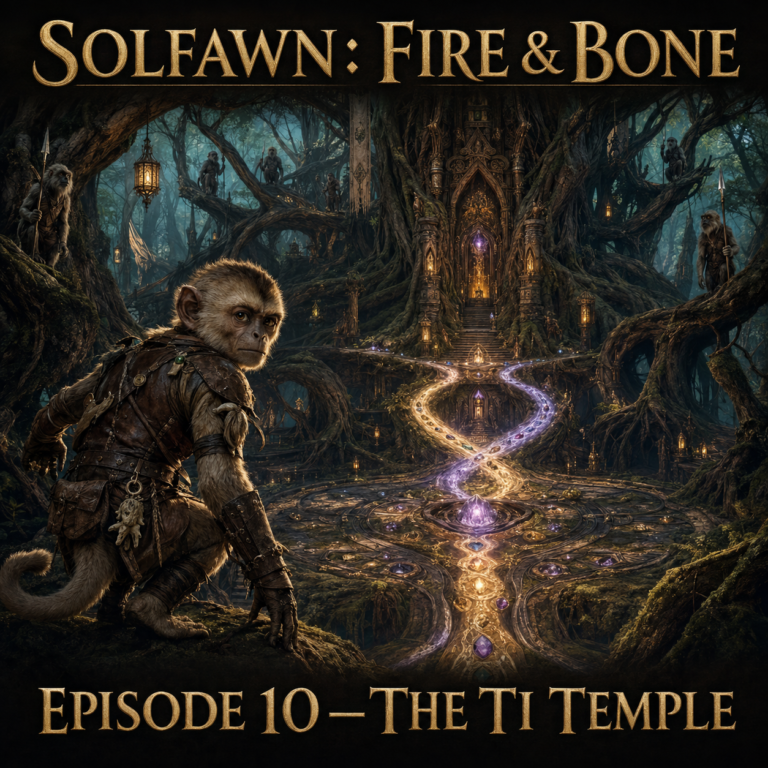 Fire & Bone — Chapter X
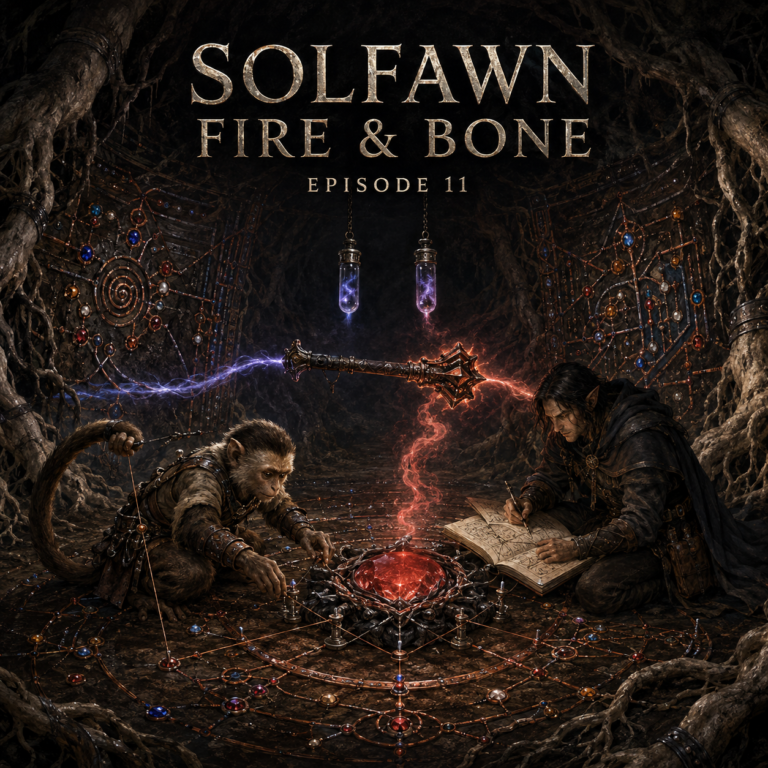 Fire & Bone — Chapter XI
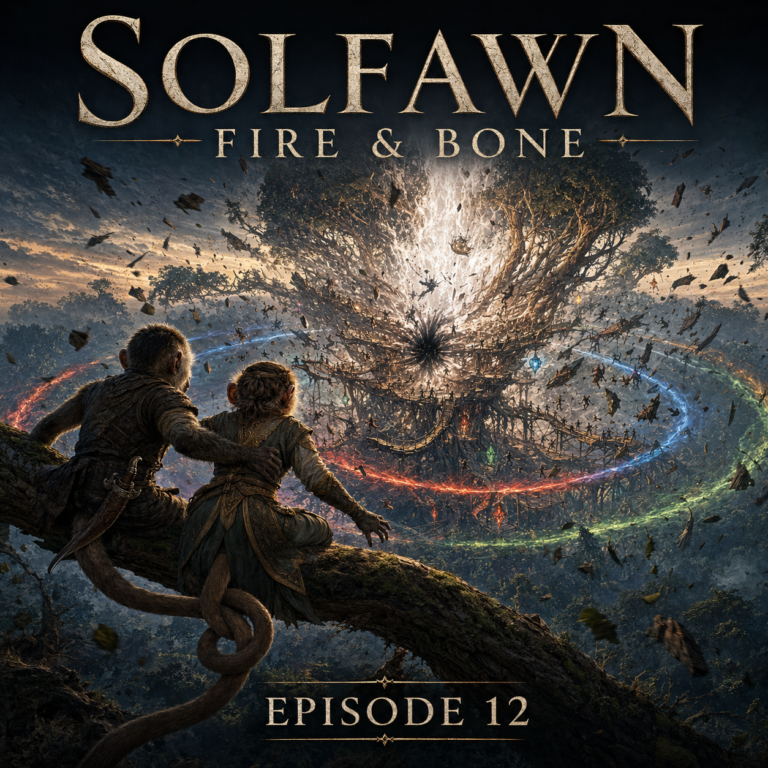 Fire & Bone — Chapter XII
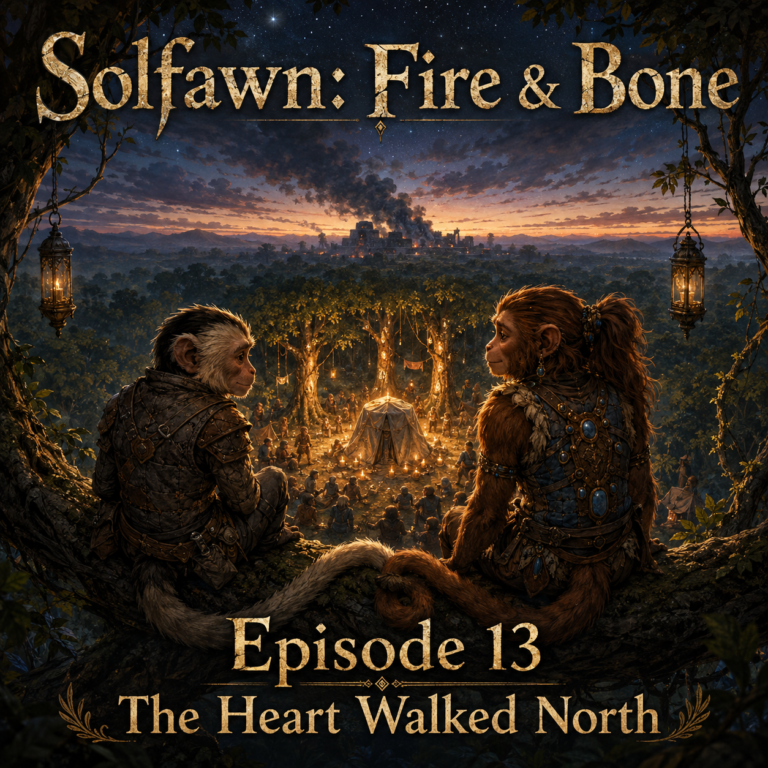 Fire & Bone — Chapter XIII
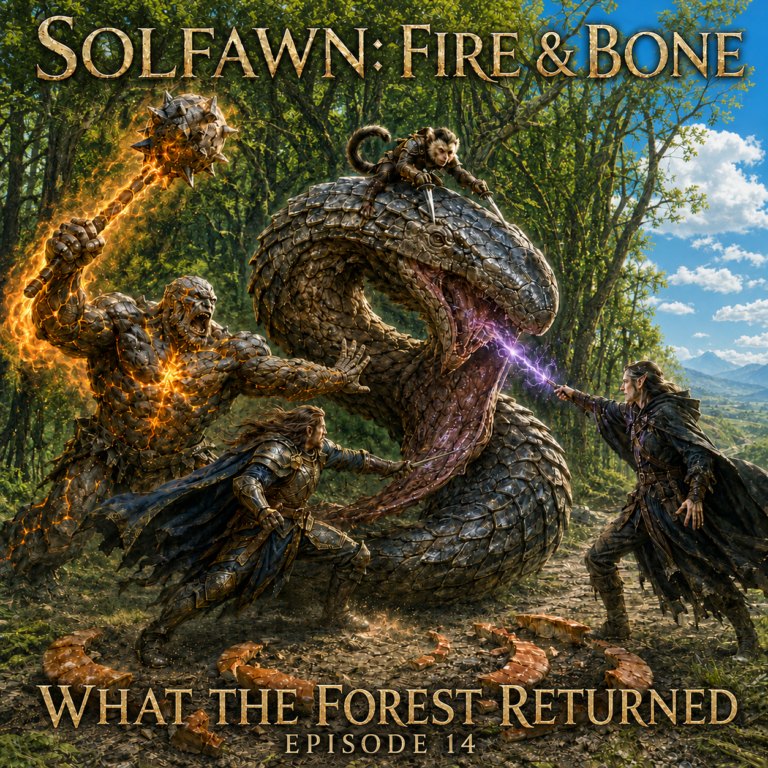 Fire & Bone — Chapter XIV
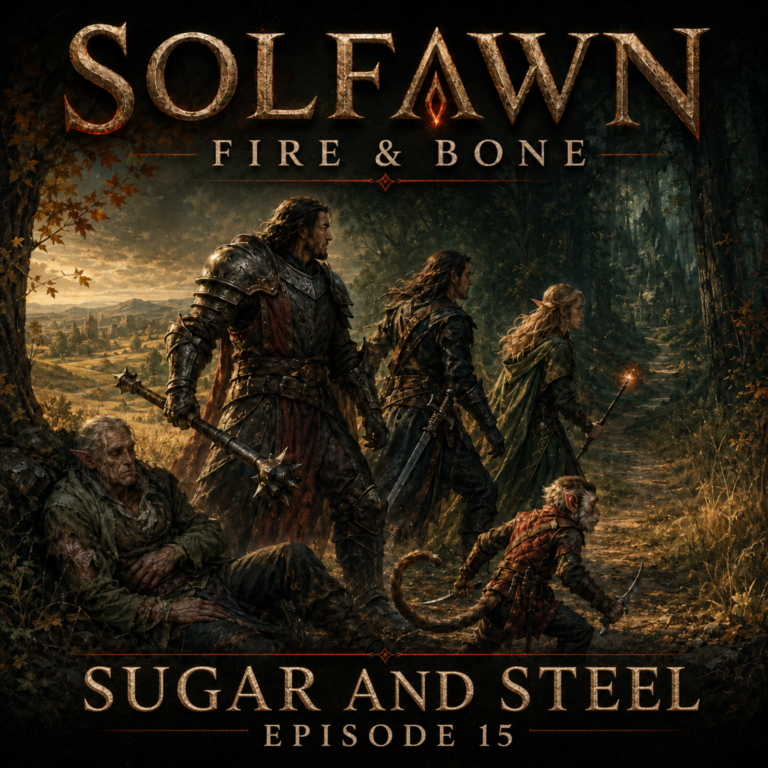 Fire & Bone — Chapter XV
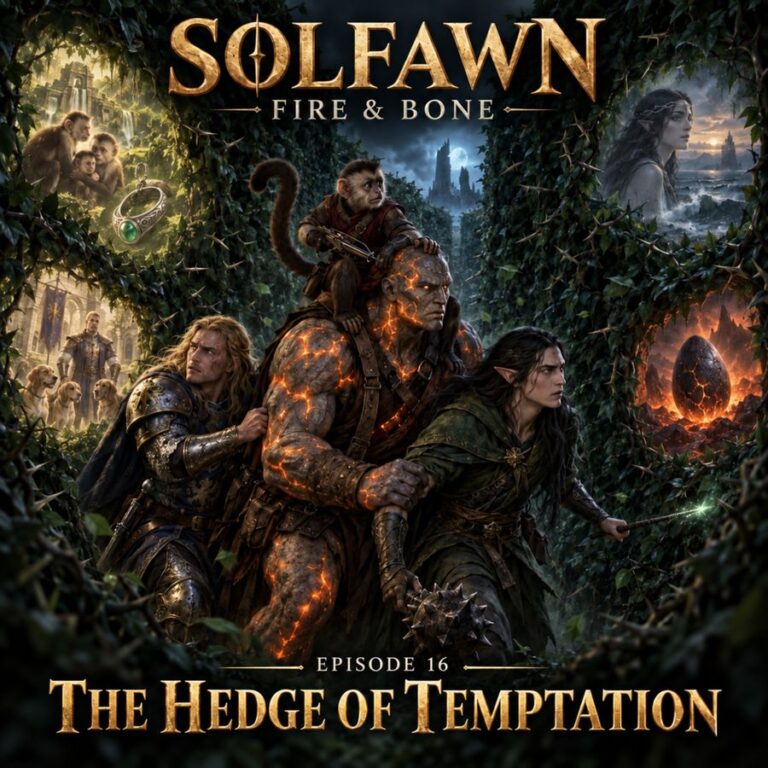 Fire & Bone — Chapter XVI
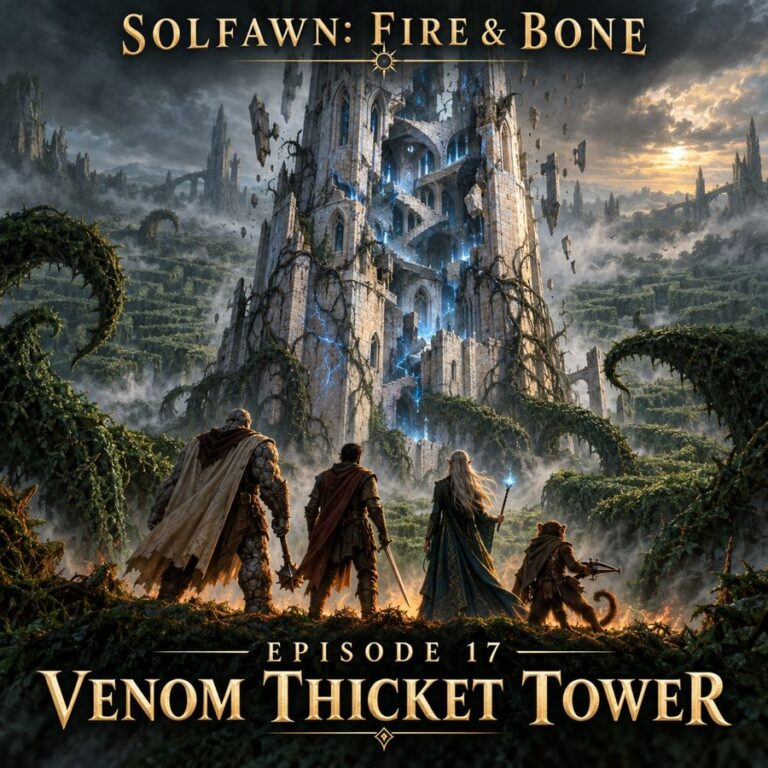 Fire & Bone — Chapter XVII
Listen along
Solfawn is also a podcast, two ways: Solfawn: Fire & Bone — the chapters read in a synthetic clone of Winston Everlast’s voice — and The Solfawn Deep Dive, a companion show whose two hosts are AI, generated from the manuscript. Each chapter above links to its own episodes; new episodes arrive as the chapters do. There is also the Solfawn channel on YouTube — home of the series soundtrack.
How Solfawn is made
Solfawn is not written the way novels are usually written, and the difference is worth stating outright rather than leaving to be discovered.
It begins at a table. Five people — four players and a game master — meeting on Thursday nights in a world they built together. What happens in the story happens there first: the choices, the mistakes, the deaths, the things nobody planned. A campaign is not so much authored as survived; the dice overrule everyone present, including the person who later publishes the result. Winston takes rough notes as the session runs.
Those notes go to ChatGPT, along with everything Solfawn has been so far, and the chapter comes back written. The prose you are reading is the model’s, and it goes up substantially as it returns. The chapters are then narrated by Speechify using a clone of Winston’s voice — the reading is synthetic, not a recording of him at a microphone. The manuscript goes to Google’s Gemini Notebook, whose two AI hosts record The Solfawn Deep Dive; the voices discussing each installment are not people. The character and episode art is made with ChatGPT as well.
So nearly every surface of this thing is machine-made. What isn’t — and it is the part that matters — is what happened. No model decided that Apple would keep the name the pirates gave him in mockery, or that the Blacklands would go the way they went. Five people did, across months, in a world of their own making, without knowing what came next. This is the record of a game that was actually played, which is a different object from a story a machine invented, and it asks to be read as that.
Some readers will discount it for how it is made. That is a fair response, and it is why this section is here rather than in the small print.